


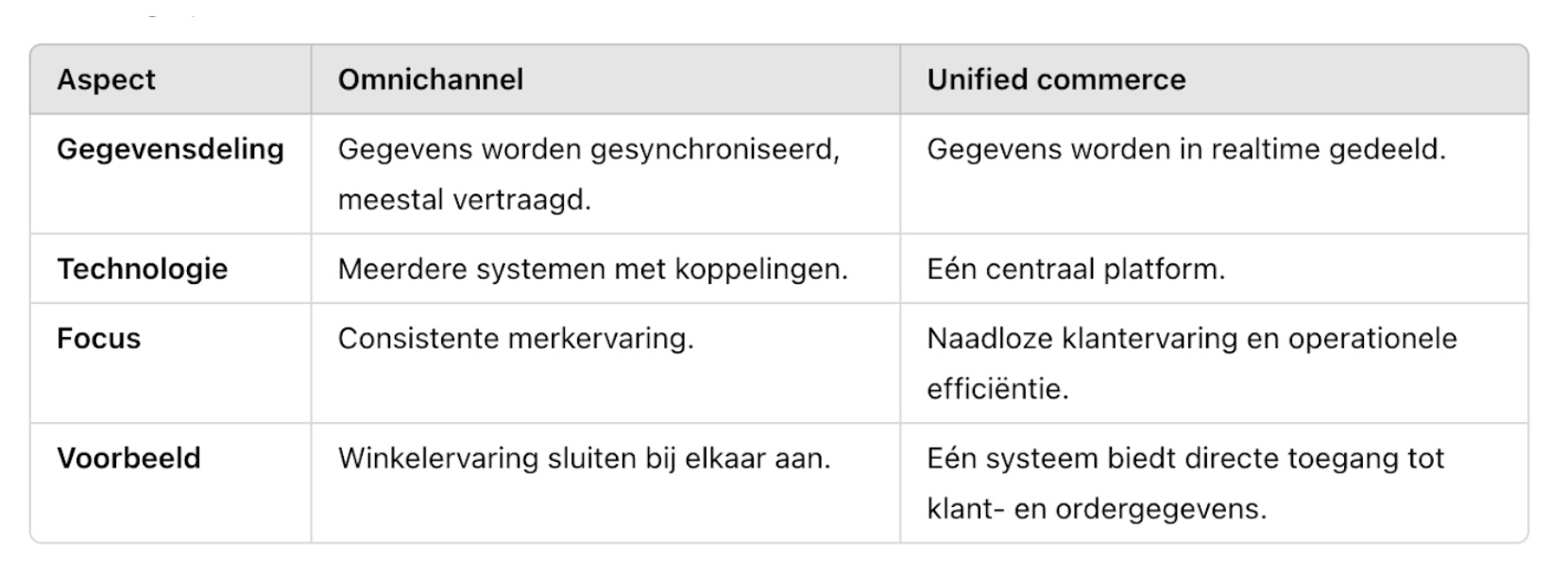
Omnichannel primarily focuses on the front-end experience, aiming to provide customers with a consistent brand image and user experience across different channels.
Example: A customer might find a product on social media, add it to their cart on the website, and later purchase it in-store, but store employees may need to consult a separate system to confirm the order.
Unified commerce focuses on creating a single source of truth in the back-end, ensuring all channels have real-time access to the same data. It is centered on system integration and centralization.
Example: A customer starts a cart in the app, visits a physical store where an employee sees the exact same data in the system, and completes the purchase with a discount that is instantly applied thanks to integrated customer loyalty information.
Unified commerce offers businesses several advantages. The key benefits are listed below.
While unified commerce offers many benefits, it also presents some challenges:
Implementing unified commerce in your business starts with a strategic approach:
Expand your knowledge about omnichannel with this whitepaper. Learn more about strategy and get an implementation roadmap.

 EN
EN
 German
 Dutch
Dutch
