

Customers are becoming increasingly demanding and expect seamless integration between online and offline channels. Omnichannel is the new eCommerce standard. More and more companies are adopting this strategy to provide a consistent customer experience and meet high expectations. Discover what omnichannel is, its advantages and disadvantages, real-life examples, and more.
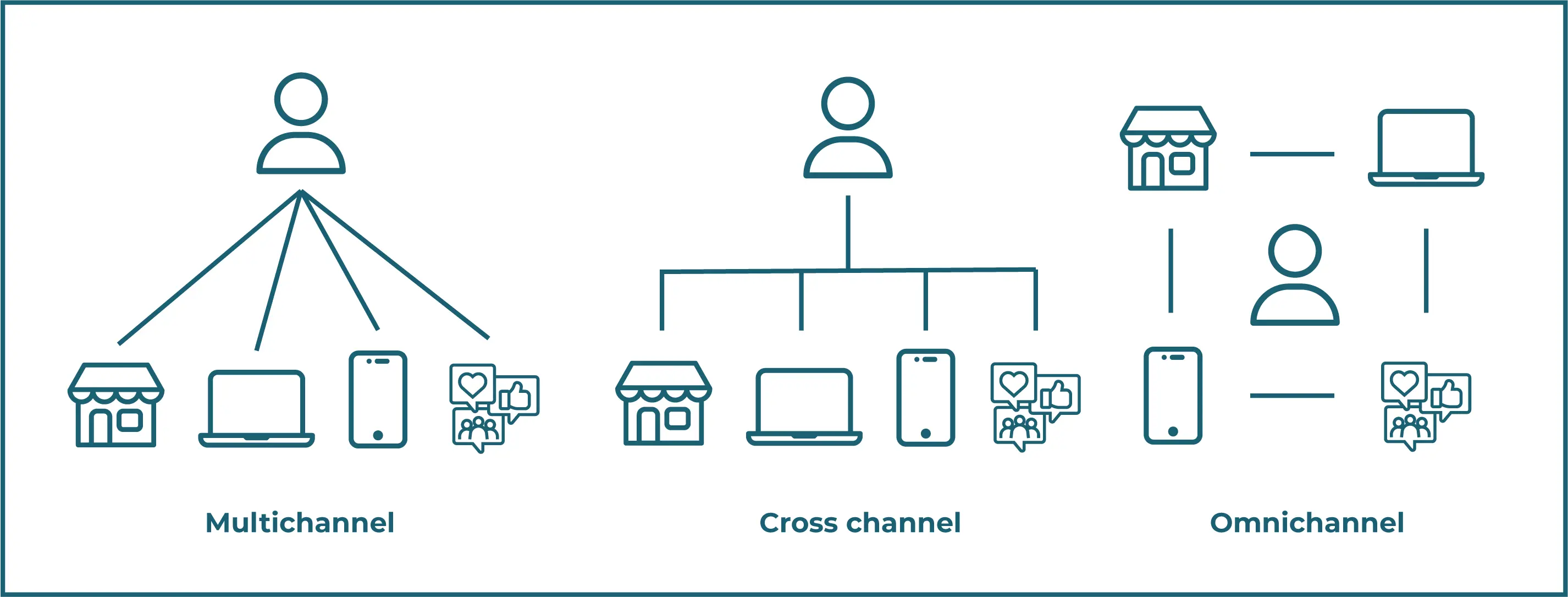
With an omnichannel strategy, you improve the customer experience. Customers receive the same information across all channels. This ensures that the branding is consistent for a unified brand image, current inventory can be found everywhere, and it is easy to switch between channels. Additionally, you have access to up-to-date data from any channel, as channels collaborate. Purchase history, preferences, and interactions are always accessible, both for the company and the customer. This allows you to serve the customer well and gives the company insights into purchasing behavior, which can be used to tailor marketing campaigns. Moreover, an omnichannel strategy saves a company time, as changes can be implemented centrally rather than per channel. Finally, conversions can increase. Customers can choose which channel to buy from and easily view their purchase history. By offering customers a convenient and consistent shopping experience, companies can increase the likelihood of conversions and repeat purchases.
An omnichannel strategy requires the integration of various channels and systems. This can be complex, time-consuming, and a significant financial investment. Furthermore, data is centrally managed in an omnichannel approach. It is crucial to secure large amounts of customer data properly, as there is a risk of data breaches and cyberattacks. Adjustments to the company structure might be needed. Teams must collaborate well, preferably without a separation between online and offline teams, as seen in some marketing departments. Lastly, maintaining and updating an omnichannel system can be costly, especially as technologies and customer expectations constantly evolve.
B2C companies more often use physical stores and social media channels like Instagram and TikTok. The focus is on quick transactions. Through the right campaigns and a good omnichannel strategy, customers can make purchases via social media or be directed to the webshop. For B2B companies, the purchase cycle is often longer. It is crucial to build long-term relationships with customers. For omnichannel, this means that departments must collaborate well and always be informed about each other's actions. Sales must deliver what marketing has promised. A consistent experience builds trust with the customer. Moreover, the personalization strategy for B2B is focused on the long term. When you know the customer better, omnichannel makes it possible to create a personalized environment across all channels. This is what you achieve with the right B2B e-commerce strategy.
One of our clients, Goossens, uses an omnichannel strategy. Goossens is a home furnishings store with a wide range of living and sleeping products. Transitioning from the physical store to the webshop is easy. For example, from the coffee corner in the store, customers can log into the webshop and compare different furniture options. Additionally, webshop visitors can create online wish lists, share products via WhatsApp, or make store appointments. Customers can also check online which stores have specific furniture available.
Another example is our client Van Beek Art Supplies, the store for artists. Customers can check on their webshop whether a product is in stock before making a purchase. This ensures that customers always know if the desired items are available, both online and in physical stores. Additionally, customers can choose to pick up products in-store when ordering. Workshops and demonstrations are also organized both online and in physical stores.
Expand your knowledge about omnichannel with this whitepaper. Learn more about strategy and get an implementation roadmap.

 EN
EN
 German
 Dutch
Dutch
