

Direct-to-Consumer (D2C) eCommerce is rapidly gaining popularity among companies looking to bypass traditional sales channels. By selling directly to consumers, brands gain more control over the customer experience and increase their margins. In this guide, you'll discover exactly what D2C eCommerce is, its benefits and challenges, and why this model can be a powerful strategy for modern businesses.
In the past, B2B companies sold exclusively to one target audience: the business market. Over the years, technology has improved, and distances have become smaller. Today, we can explore more than one traditional route, making it easier to bypass intermediaries.
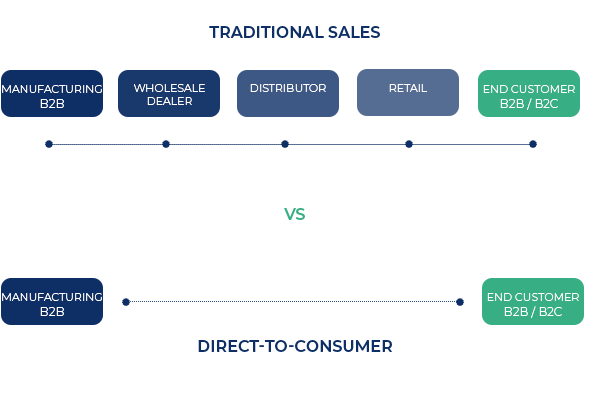
More and more, B2B companies are adopting direct-to-consumer eCommerce. Direct-to-consumer (D2C or DTC) means the direct sale of products from the (brand) manufacturer to the consumer without the involvement of retailers, wholesalers, or other sales outlets. Not only does a D2C strategy reduce supply chain issues, but it also enhances customer loyalty to your brand. Additionally, it increases margins by eliminating intermediaries from the chain. This is reason enough to delve deeper into this model.
eCommerce moves fast. Borders are fading, and customers can make purchases from anywhere in the world, right from their homes or offices. Where wholesalers, distributors, or traders used to be part of the process, D2C eCommerce bypasses these intermediaries, resulting in significant savings for both you and the customer.
However, don't jump to conclusions: while intermediaries might seem redundant, they are not always unnecessary. They perform essential tasks to get your product to the customer, such as storage, logistics, marketing, customer service, and more. If you decide to adopt the D2C model, these tasks will also need to be integrated into your strategy.
While the benefits are numerous, D2C eCommerce also comes with its challenges. As previously mentioned, you take on responsibilities such as logistics, customer service, and marketing yourself. This can be a significant operational burden, especially for companies accustomed to working with intermediaries.
You will also need to invest in technology to make your D2C strategy successful. This includes a robust eCommerce website, advanced order fulfillment systems, and tools for customer management and marketing automation. Without the right infrastructure, it can be challenging to meet the high expectations of consumers.
D2C eCommerce is particularly appealing for brands that already have a strong connection with their customers or are seeking more direct control over their brand experience. Companies that offer innovative products with unique value propositions can gain significant advantages from the D2C model. Additionally, it provides opportunities for startups and small brands to expand their market share without relying on traditional retail networks.
In a world where consumers increasingly expect more from their online shopping experience, D2C eCommerce can be a powerful strategy to build a direct and lasting relationship with your target audience.
By embracing the D2C model, your brand creates more flexibility, control, and potential to be successful in the ever-evolving world of eCommerce.
CloudSuite offers B2B companies a comprehensive solution for webshop management, overcoming the challenges of complex pricing structures and negotiations.

 EN
EN
 German
 Dutch
Dutch
