EN
EN
 German
 Dutch
Dutch

From digital catalog to customer portal – self‑service and personal contact in practice
18-08-2025



Customers today expect the best of both worlds. They want to place an order independently at 11:00 PM, but the next morning receive personal advice from their account manager. They search online for technical specifications themselves, but for complex projects they want to speak directly with an expert. This may seem contradictory, but it is exactly what the modern B2B customer experience demands: speed and convenience combined with personal and expert contact.
For many wholesalers and brand manufacturers, this feels like an impossible puzzle. How do you offer the efficiency of an Amazon-like experience while maintaining the personal service customers value? The answer is not choosing between digital or personal, but in smartly combining both in a modern customer portal.
The B2B world has changed dramatically. In 2017, only 20% of B2B buyers preferred digital interactions and purchases. That number has now risen to 67%, according to McKinsey research . Where wholesale customers once mainly ordered via phone or email, they now expect a digital experience that is as seamless as the one they are used to at home: fast, intuitive, and always available.
For Dutch wholesalers, this offers enormous opportunities. By investing in digitalization and a customer portal, you can not only meet these new expectations, but also streamline internal processes and strengthen customer loyalty.
A customer portal is all about accessibility and autonomy. According to Gartner research , 95% of companies worldwide are seeing an increase in demand for self-service. Customers want to handle their business when it suits them – even outside office hours.
In a well-structured portal, customers can independently place orders, request quotes, and check their order status. They have access to up-to-date inventory levels, invoices, and their order history – all without involving the inside sales team or account managers. Companies that implement online self-service reduce their customer service costs by an average of 30% while at the same time preventing errors caused by manual processing.
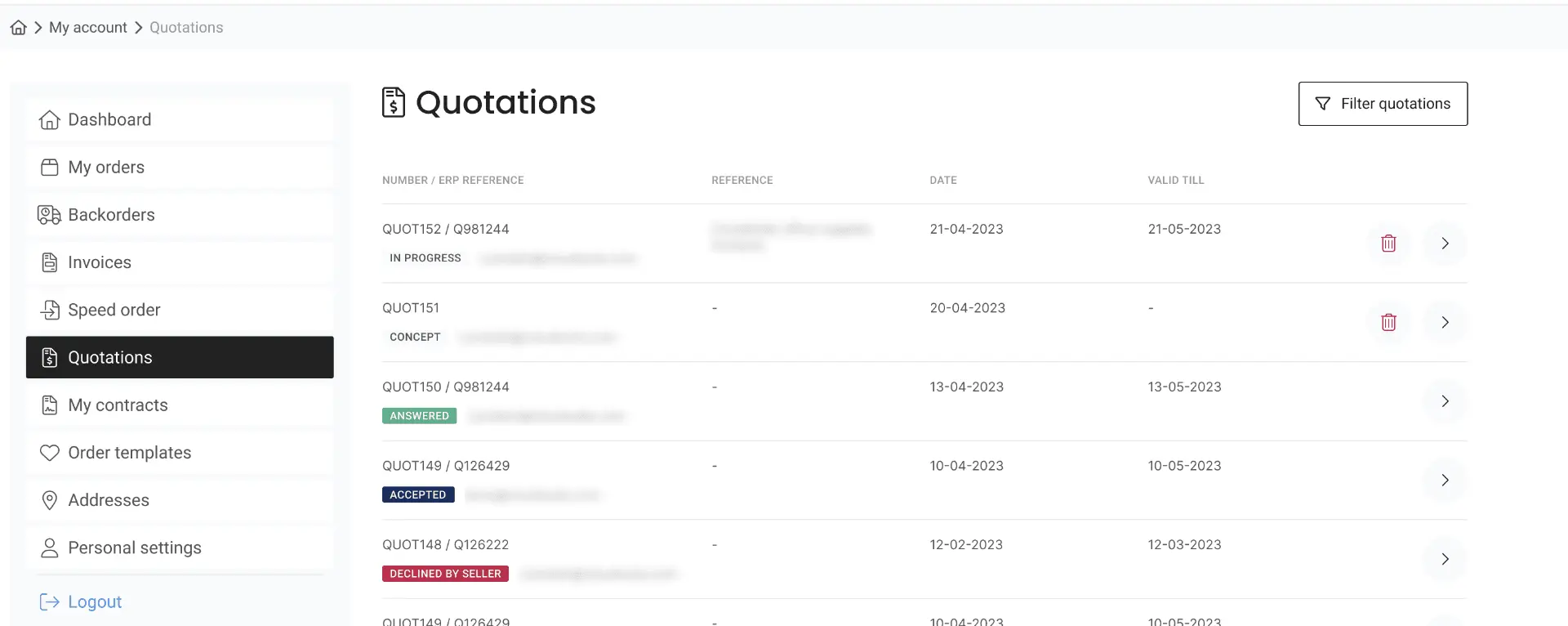
A technical wholesaler can offer customers the option to directly configure complex product combinations via the portal and automatically generate a quote. This greatly shortens lead times and reduces reliance on the inside sales team.
CloudSuite use case: With CloudSuite’s quotation module, customers can directly configure and request quotes in the portal, which are automatically synchronized with the ERP system.
The power of a customer portal lies in up-to-date and personalized information: customer-specific prices, contract terms, and relevant product documentation. By integrating with your ERP system, customers always have access to the most recent data. McKinsey states that 73% of B2B buyers – compared to 59% two years earlier – are willing to spend more than $50,000 per order, provided they trust the digital experience.
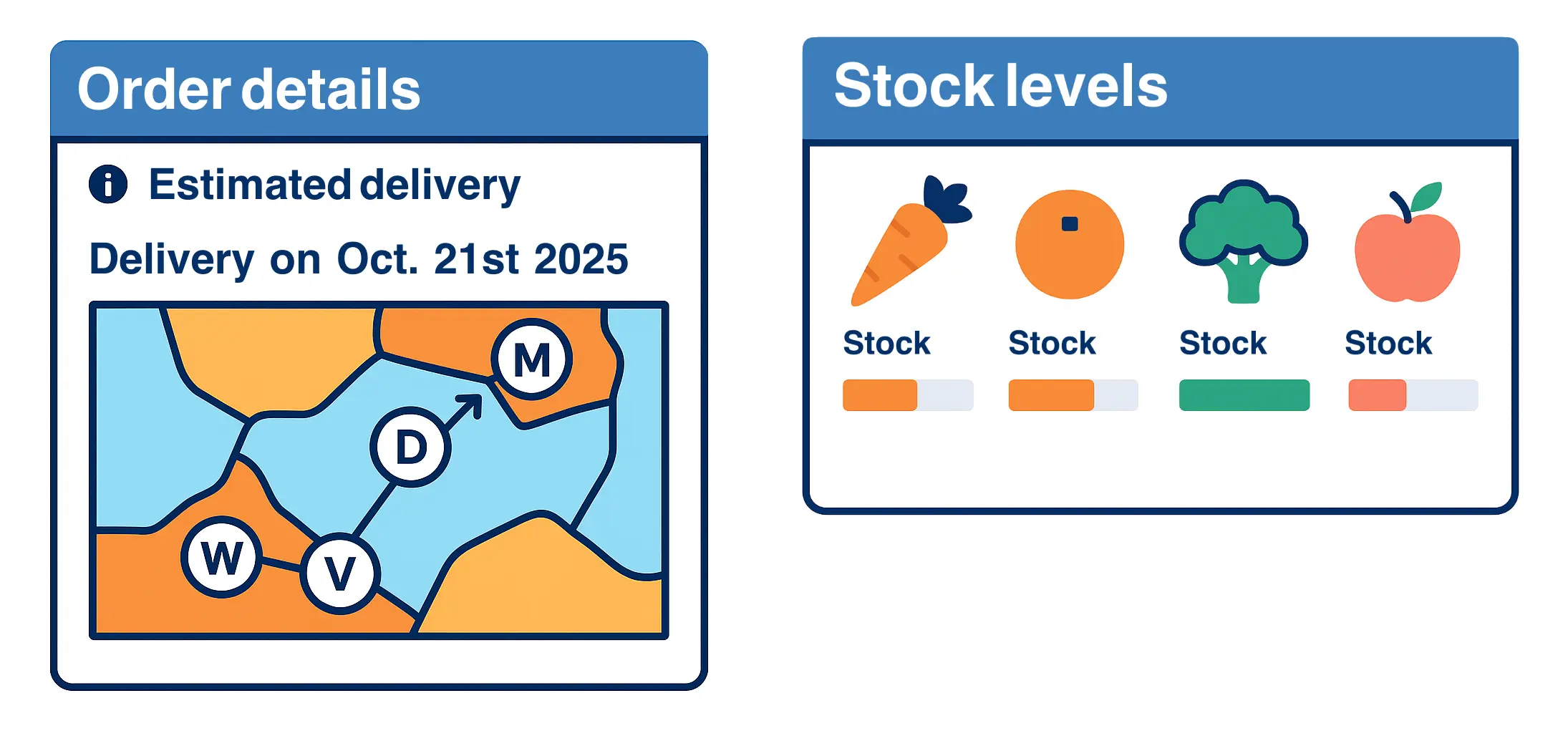
A construction supplier can show actual delivery times in the customer portal, based on inventory and logistics planning. This way, customers immediately know on which date their goods will be delivered, without having to call or email the sales department.
CloudSuite use case: Thanks to ERP integration in CloudSuite, inventory levels and delivery times are displayed in real-time, fully tailored to specific customer agreements. In addition, route and delivery schedules are automatically loaded, so customers can see exactly on which days deliveries will take place at their location.
Self-service does not replace personal contact – it makes it more valuable.
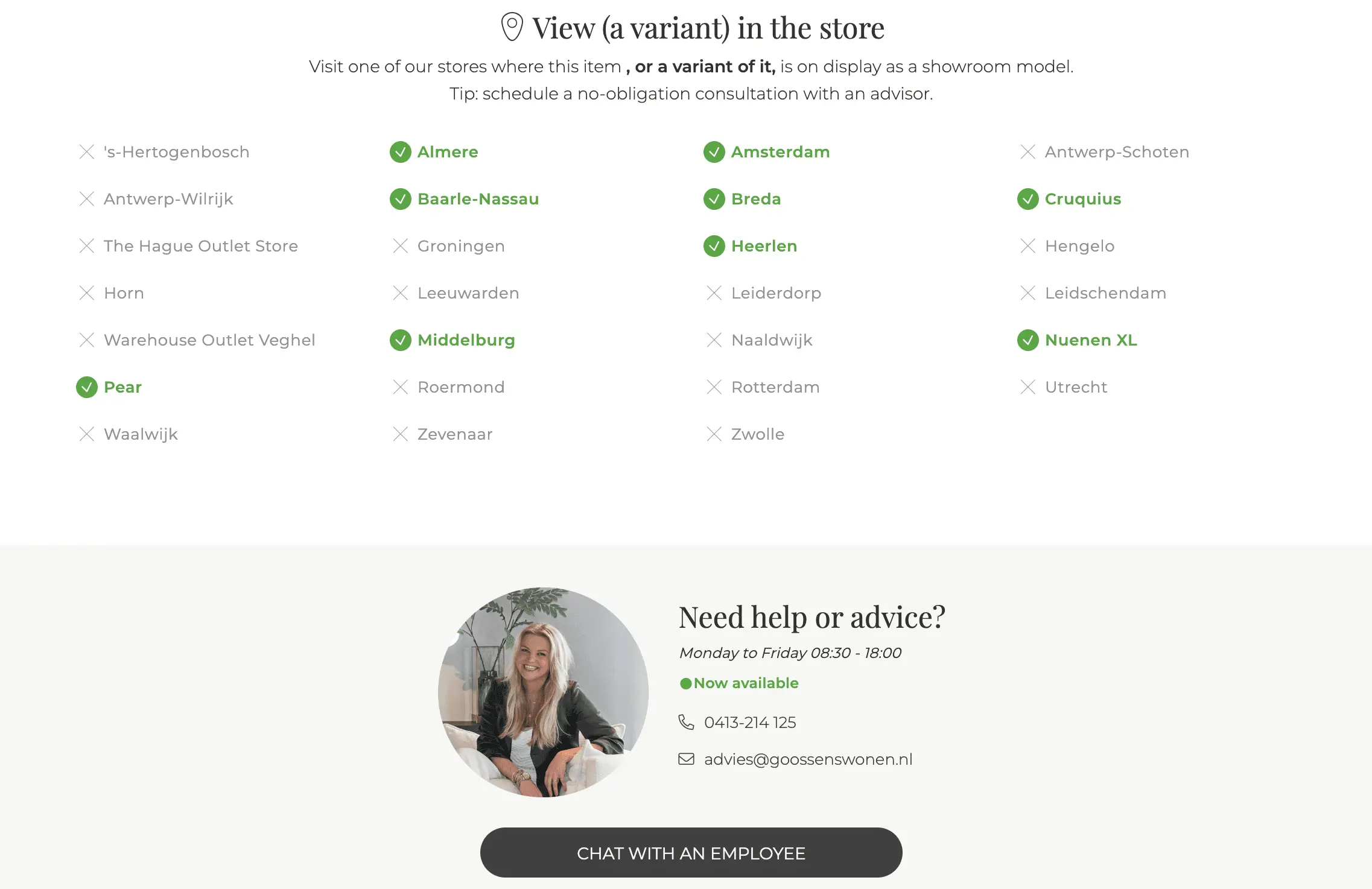
A modern portal offers several options for direct contact: live chat, a callback request, or simply scheduling an appointment with the account manager. Because your team has insight into customer behavior within the portal, conversations can be conducted much more purposefully.
A supplier of industrial parts can offer a function via the portal that allows customers to schedule a video call with a product specialist. This way, customers receive personal advice exactly when they need it.
CloudSuite use case: CloudSuite supports integration with communication tools, enabling customers to easily schedule appointments or start a chat directly from the webshop, as in the example of Goossens Wonen & Slapen, where you can request direct online advice.
Do you notice a customer staying on a product page for a long time without ordering? Your team can immediately offer support. This sets you apart from competitors who only act reactively.
The power of a customer portal lies in its integration with systems such as ERP, CRM, and PIM. This ensures that all customer information is up to date and consistent, regardless of the contact channel. Research shows that 80% of companies that connect their customer portal to ERP, CRM, and PIM report a clear improvement in data quality, 68% report revenue growth, and 60% experience an improved customer experience.
The portal displays only relevant information: assortment, pricing, and offers are tailored to the customer profile and purchase history. This personalization significantly increases the chance of conversion – 40% of B2B buyers cite the digital experience as a decisive factor in their purchasing decision.
A food wholesaler can provide each customer type with a personalized homepage. Restaurants immediately see their previously ordered menu ingredients and seasonal offers, while fishmongers get instant access to their most frequently ordered fish and current daily prices.
In addition, internal roles can have role-specific dashboards. Purchasing staff have insight into order history, open orders, and invoices, while warehouse managers can monitor current stock levels, incoming deliveries, and urgent orders.
CloudSuite use case: CloudSuite offers role-specific dashboards and customer-specific homepages, ensuring that each user only sees the information and functions relevant to them.
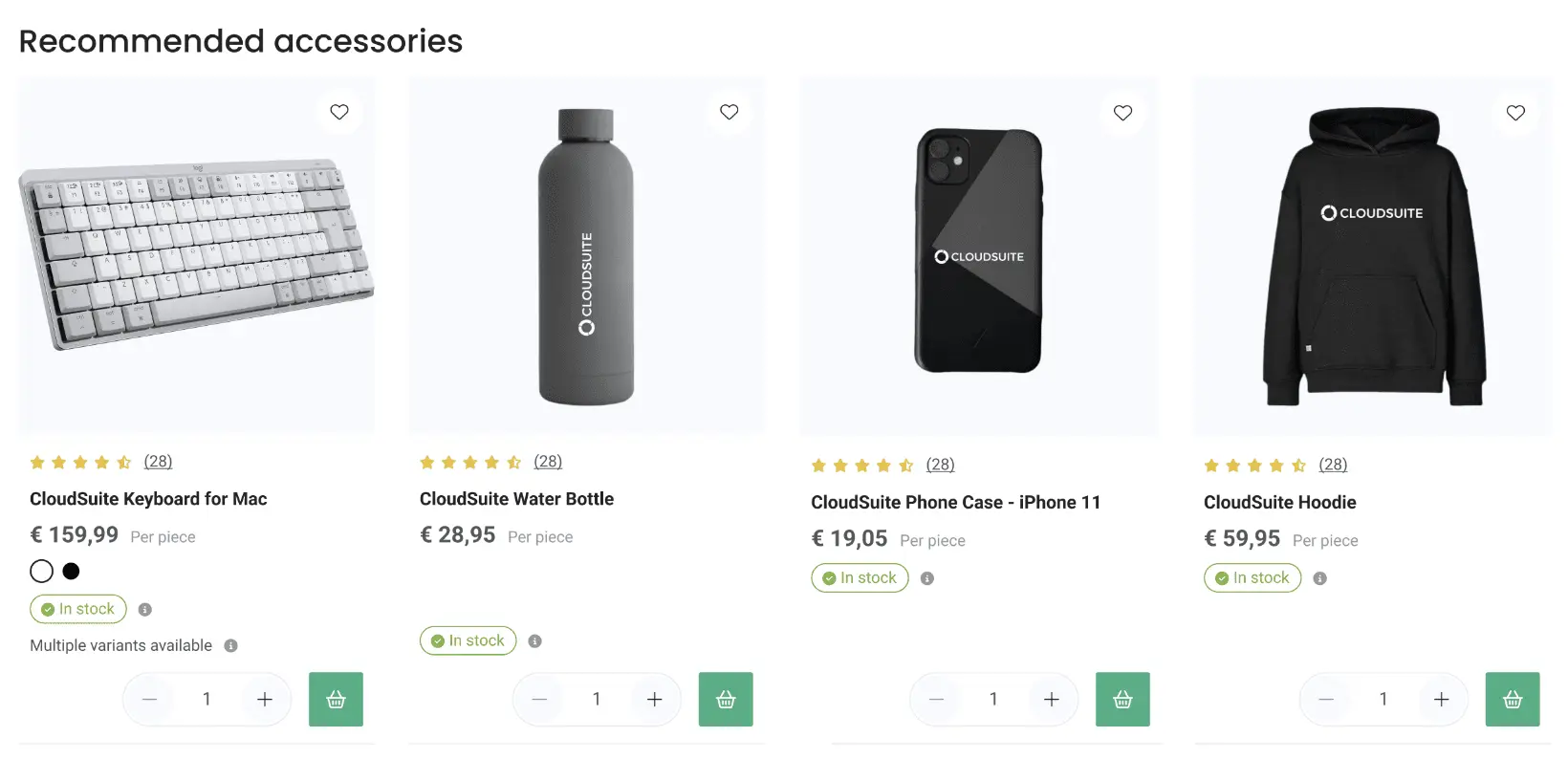
A machinery manufacturer can automatically suggest maintenance packages or accessories based on ordering behavior. This way, you increase the order value without manual effort.
CloudSuite use case: Thanks to CloudSuite’s Relevance module, dynamic cross- and upsell suggestions are generated based on customer behavior and purchase history.
Building a customer portal is about more than just technology. It’s about creating an experience that continues to actively engage customers:
A well-structured customer portal is the central hub of your customer relationship. It offers the efficiency of self-service while strengthening personal contact.
For wholesalers and B2B companies that want to seriously invest in digitalization, this is the moment. Competition is getting stronger, and customers more demanding.
The question is not whether your customers deserve a better customer portal, but when you will start with it.
Discover how CloudSuite helps you build a future-proof customer portal. Contact us for a demo or consultation.

Curious how to combine the efficiency of self‑service with the personal contact your customers value? Our experts are happy to help you define the right strategy and functionalities for your situation.